


Conceived as a veritable secular initiation, the exhibition is divided into nine sections, nine portals, nine “trials” that, following the anthropological concept of initiation, will allow the visitor to acquire a new awareness and be “reborn” with a new “power”, identified in knowledge, art and culture – a triad far more powerful than any magic.

Witches' Engravings
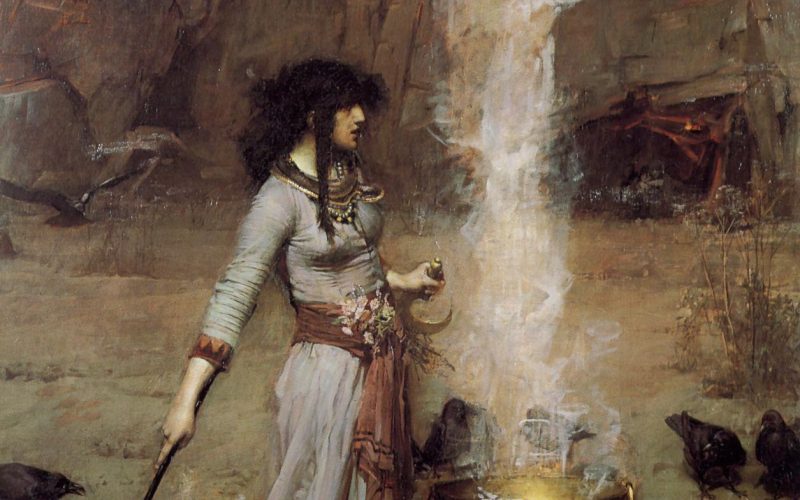
A woman who knows
Stregherie is an exhibition that invites us to rethink our relationship with power, the body and knowledge, overcoming prejudices about the figure of the witch. Through the story of magic, persecution and resistance, the exhibition guides the visitor to a new awareness: not a monster, but a woman who looks like one, a woman who knows.
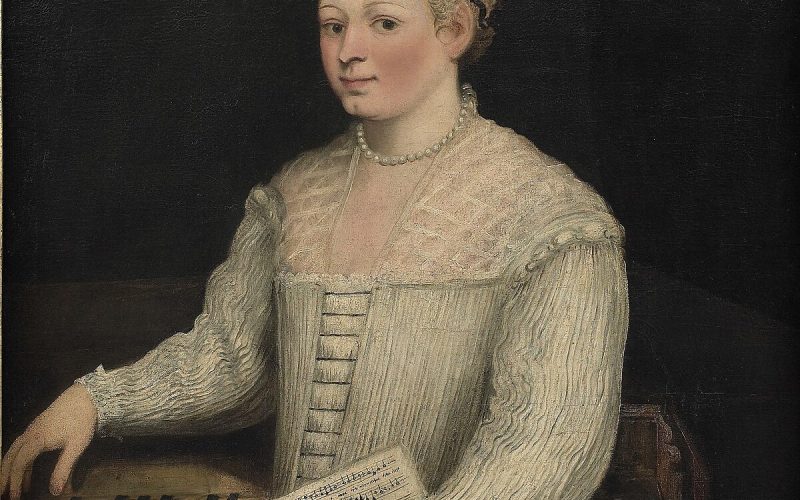
The artist's atelier: the story of “Tintoretta”, the daughter of Jacopo Robusti known as 'Tintoretto'
“Tintoretta’ was Marietta Robusti, daughter of Jacopo Tintoretto, the famous Venetian Renaissance painter. A talented artist who grew up in her father’s atelier, her story is linked to a Venetian legend involving her, her father and a witch. It is said that to protect the house from the threat, Tintoretto had a relief of Hercules with a club carved on the façade in Campo dei Mori, still visible today. But what is the true meaning of this symbol? The legend leaves many questions open.
Stregherie - The new exhibition
An exhibition of great visual impact that weaves together ancient engravings with daring content, rare esoteric texts from the 16th century and talismans from past eras, offering an evocative look at the mysterious universe of witchcraft and the enigmatic figure of the witch.
After the great success of its previous stops in Monza and Bologna, which brought it to the Italian public for the first time, STREGHERIE. Iconography, rites and symbols of the heretics of knowledge. This edition is completely renewed thanks to a new, more expert curatorship and a radically rethought exhibition concept. Leading this new vision is the art historian, writer and criminologist, Andrea Pellegrino, who signs a new, profound and surprising version of the exhibition.
Conceived as a true secular rite of passage, STREGHERIE is not just an artistic exhibition, but an immersive and transformative experience. Far from fairytale caricatures or inquisition nightmares, the figure of the witch proposed in this project is an archetype rich in meaning: a woman who knows, a bearer of forgotten knowledge, a voice that resists.

The exhibition
The exhibition unfolds through nine narrative sections, conceived as nine initiatory portals that guide the visitor on a journey through myth, body, knowledge, persecution and rebirth. From the oracular and pre-Christian origins of the witch to its actualisation as a symbol of political and cultural resistance, each room accompanies the public in a process of transformation through works of art, installations, documents and ritual objects.
It starts from the deep roots of myth, with an immersion in ancient cults, in the symbolism of the primordial feminine and in the oral narratives that gave life to the archetype of the witch. The second passage deals with the body, understood as embodied knowledge, territory of desire and rebellion: a body that does not allow itself to be normalised, but that knows and resists.
Next, the visitor enters the dimension of oblivion, where popular knowledge – natural medicine, herbalism, magical practices – are restored to their cultural dignity. We then come to the hall of the mark, which explores the historical and iconographic dynamics that constructed the demonic image of the witch, from medieval miniatures to inquisitorial propaganda.


The curator of the “Stregherie” exhibition
Andrea Pellegrino, journalist, writer and art historian, has a degree in Science of Cultural Heritage. His background combines an interest in the symbolic value of works of art with a passion for mystery and esoteric literature. An AICIS-certified criminologist, with specialisation in Clinical Criminology and Criminal Psychology, he teaches post-graduate courses and also deals with cultural heritage crimes.
Deputy director of Libraio Editore, an editorial project of the historic Libreria Esoterica in Milan, Pellegrino is a reference figure on the cultural scene: he lectures, conducts conferences and collaborates with national newspapers and media on criminology, esotericism and artistic symbolism.
Andrea Pellegrino Speaks
"At the end of the journey, the spectator will not find a monster. He will find a figure who looks like one. A woman who knows."
The witch is not just a figure from the past: she is a living memory, a political body, a symbol of resistance.
This exhibition is a journey through art, historical documents and ancient objects that tell how the archetype of the witch has been transformed over the centuries. Room after room, the journey becomes interior and symbolic, inviting the visitor to overcome prejudices and fears, until discovering in the witch’s eyes not a monster, but a mirror.